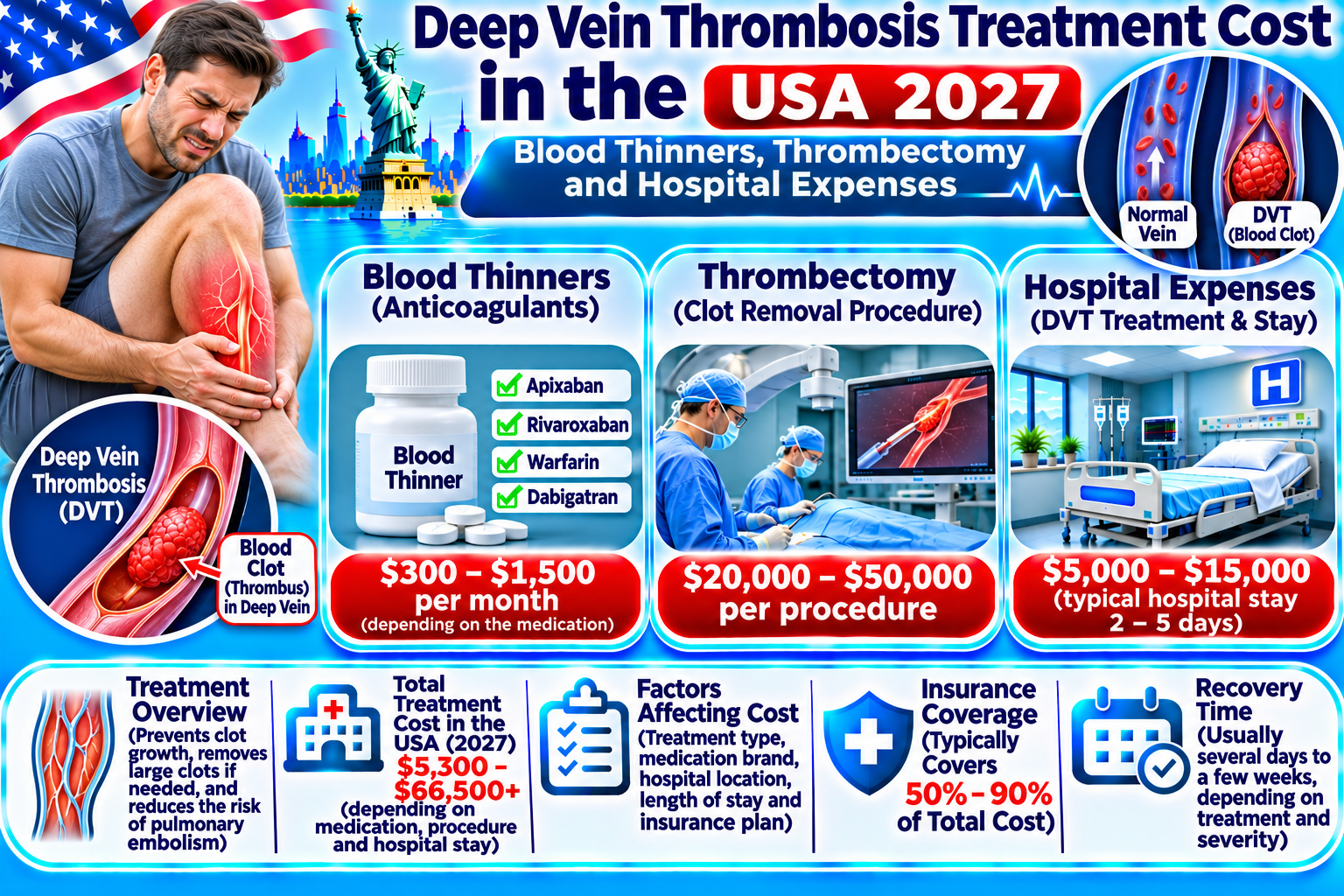
Deep vein thrombosis (DVT) is a potentially serious medical condition that develops when a blood clot forms inside a deep vein, most commonly in the leg. The clot can interfere with normal blood circulation and cause swelling, pain, and discomfort. More importantly, part of the clot can sometimes travel to the lungs and cause a pulmonary embolism, which may be life-threatening.
Understanding deep vein thrombosis treatment costs in the USA in 2027 is important for patients comparing blood thinners, mechanical thrombectomy, diagnostic ultrasound, vascular specialist fees, and hospital expenses. Treatment costs vary depending on clot location, severity, prescribed medication, insurance benefits, and whether hospitalization is necessary.
Most patients with uncomplicated DVT are treated with anticoagulant medications rather than surgery. However, selected patients with extensive or limb-threatening blood clots may require specialized procedures to restore blood flow.
This comprehensive guide explains estimated DVT treatment prices in the United States for 2027, including anticoagulant medications, thrombectomy, catheter-directed treatment, emergency care, Medicare coverage, and long-term financial planning.
What Is Deep Vein Thrombosis?
Deep vein thrombosis occurs when a blood clot forms in a vein located deep within the body. Although DVT most frequently affects the lower extremities, clots can also develop in the arms, pelvis, and other deep veins.
Blood clots may form when circulation slows, the blood becomes more likely to clot, or the lining of a blood vessel becomes damaged.
DVT is part of a broader condition called venous thromboembolism, which also includes pulmonary embolism.
Early diagnosis and appropriate treatment are essential because anticoagulation can help prevent clot enlargement, recurrence, and serious complications.
Common Symptoms of Deep Vein Thrombosis
DVT symptoms can vary considerably. Some patients experience obvious discomfort, while others have relatively mild symptoms.
Common warning signs include:
- Swelling in one leg or arm.
- Pain or tenderness in the affected limb.
- Warmth over the affected area.
- Redness or unusual skin discoloration.
- A feeling of heaviness or tightness.
- Visible enlargement of superficial veins.
- Discomfort that becomes noticeable while standing or walking.
These symptoms can also occur with other medical conditions. Suspected DVT requires prompt medical evaluation rather than self-diagnosis.
Sudden shortness of breath, chest pain, coughing blood, fainting, or a rapid heartbeat may indicate pulmonary embolism and require emergency medical attention.
What Causes Deep Vein Thrombosis?
Several medical and lifestyle factors can increase the likelihood of developing DVT.
Important risk factors include:
- Recent major surgery or hospitalization.
- Prolonged immobility or bed rest.
- Previous DVT or pulmonary embolism.
- Active cancer or certain cancer treatments.
- Pregnancy and the postpartum period.
- Estrogen-containing medications.
- Inherited or acquired clotting disorders.
- Significant injury involving blood vessels.
- Older age and certain chronic illnesses.
Some patients develop DVT without an obvious temporary trigger. Doctors consider the circumstances surrounding the clot when determining treatment duration and recurrence risk.
Types of Deep Vein Thrombosis
Distal DVT
Distal DVT affects veins below the knee. Selected lower-risk patients may undergo serial ultrasound surveillance rather than immediate anticoagulation, depending on symptoms and the risk of clot extension.
Proximal DVT
Proximal DVT involves veins at or above the knee, including the popliteal, femoral, or iliac veins. These clots generally require anticoagulation because of the risk of pulmonary embolism.
Upper Extremity DVT
Upper extremity DVT affects deep veins in the arm or shoulder region. It may be associated with central venous catheters, certain medical conditions, or anatomical compression.
How Is Deep Vein Thrombosis Diagnosed?
Doctors evaluate symptoms, medical history, and clinical risk factors before selecting diagnostic tests.
Common examinations include:
- Compression duplex ultrasound to identify venous clots.
- D-dimer blood testing in appropriately selected patients.
- Blood tests assessing kidney function and blood counts.
- CT or MR venography when additional imaging is necessary.
- Evaluation for pulmonary embolism when symptoms suggest lung involvement.
Duplex ultrasound is commonly the first imaging test used for suspected leg DVT.
Not every patient needs advanced imaging. Testing decisions depend on clinical probability, symptoms, and the location of the suspected clot.
Deep Vein Thrombosis Treatment Options
Anticoagulant Medications
Anticoagulants, commonly called blood thinners, are the primary treatment for most patients with DVT. They reduce the blood’s ability to form additional clots while the body gradually breaks down the existing clot.
Common medications include apixaban, rivaroxaban, warfarin, and injectable heparin products.
Direct oral anticoagulants are often preferred for eligible patients because they generally do not require the routine INR monitoring associated with warfarin.
Mechanical Thrombectomy
Mechanical thrombectomy is a catheter-based procedure that physically removes or reduces clot material from a blood vessel.
It may be considered for carefully selected patients with extensive symptomatic DVT, particularly when the clot threatens the limb or involves major pelvic and upper-leg veins.
Thrombectomy is not routinely necessary for most uncomplicated DVT cases.
Catheter-Directed Thrombolysis
Catheter-directed thrombolysis delivers clot-dissolving medication directly into or near a blood clot.
Because thrombolytic medications can cause significant bleeding, this approach is reserved for selected situations after careful assessment of risks and benefits.
Compression and Supportive Care
Compression stockings may help relieve swelling and discomfort in some patients, but they are not routinely prescribed solely to prevent post-thrombotic syndrome.
Appropriate mobility, leg elevation, and follow-up care may also support recovery, according to the treating clinician’s instructions.
Deep Vein Thrombosis Treatment Cost in the USA in 2027
DVT treatment costs depend on whether the patient receives outpatient anticoagulation, inpatient care, or a specialized vascular procedure.
Medication-only treatment is generally less resource-intensive than catheter-based intervention, although actual expenses depend on insurance and medical circumstances.
The following amounts are illustrative 2027 budgeting ranges, not verified national averages, guaranteed provider quotations, or predictions of insurance reimbursement.
Estimated USA Cost Breakdown
| Treatment or Service | Estimated Cost (USD) |
|---|---|
| Initial Physician Consultation | $150–$500+ |
| Duplex Venous Ultrasound | $250–$1,500+ |
| D-Dimer and Basic Laboratory Tests | $50–$400+ |
| Generic Warfarin Medication | $5–$40+ per month |
| Apixaban or Rivaroxaban | $30–$600+ per month |
| Injectable Anticoagulant Treatment | $100–$1,500+ per treatment course |
| INR Monitoring Appointment | $20–$150+ per visit |
| Mechanical Thrombectomy With Facility Care | $20,000–$70,000+ |
| Catheter-Directed Thrombolysis | $15,000–$50,000+ |
| Hospital Admission for Complicated DVT | $8,000–$30,000+ |
| Vascular Specialist Follow-Up | $100–$400+ |
Important: These hypothetical ranges combine different pricing concepts and are intended only for preliminary budgeting. Medication prices depend on brand, generic availability, dosage, and pharmacy. Procedure quotations may already include hospitalization and professional fees.
USA DVT Treatment Cost Comparison
Because this guide focuses on the United States, the following table compares treatment scenarios within the American healthcare system rather than different countries.
| USA Treatment Scenario | Illustrative Overall Budget |
|---|---|
| Uncomplicated Outpatient DVT Treatment | $500–$4,000+ over initial treatment |
| DVT With Hospital Admission | $8,000–$30,000+ |
| Mechanical Thrombectomy Episode | $20,000–$70,000+ |
| Complex DVT With Complications | $30,000–$100,000+ |
These figures are not equivalent treatment alternatives. Most patients do not require thrombectomy, and treatment selection must be based on clinical findings rather than price.
Blood Thinner Medication Cost in the USA
Anticoagulant medication is the foundation of treatment for most patients with deep vein thrombosis. The total expense depends on the medication prescribed, duration of treatment, insurance coverage, and monitoring requirements.
Warfarin is generally inexpensive as a generic medication, but patients need regular blood testing to monitor its anticoagulant effect. These appointments can increase the overall cost of care.
Apixaban and rivaroxaban are direct oral anticoagulants commonly used for eligible patients. Their prices vary by product, pharmacy, insurance formulary, and available generic options.
Patients should compare the complete treatment cost, including laboratory testing and consultations, rather than medication prices alone.
Apixaban vs Rivaroxaban vs Warfarin Costs
Different anticoagulants have different dosing schedules, monitoring needs, and potential interactions.
- Apixaban: An oral anticoagulant that generally does not require routine INR monitoring.
- Rivaroxaban: An oral anticoagulant with dosing requirements that vary during different treatment phases.
- Warfarin: A lower-cost generic medication requiring regular INR monitoring and attention to interactions.
- Heparin products: Injectable anticoagulants used in selected circumstances, including certain hospital treatment plans.
Medication selection depends on kidney function, liver disease, pregnancy status, other medications, bleeding risk, and additional clinical considerations.
Patients should never switch or stop anticoagulants without professional medical guidance.
Mechanical Thrombectomy Cost and Hospital Bills
Mechanical thrombectomy is generally more expensive than outpatient medication management because it requires specialized catheters, imaging equipment, procedural staff, and hospital resources.
A published analysis of hospital encounters involving mechanical thrombectomy for DVT reported substantial variation in charges and underlying hospital costs. The reported hospital costs differed by device group and patient characteristics.
These findings illustrate why an advertised hospital charge should not be confused with the actual cost of delivering treatment or the amount an insurer pays.
A complete thrombectomy quotation may include:
- Interventional specialist professional fees.
- Catheterization laboratory or operating room services.
- Mechanical thrombectomy devices.
- Ultrasound and other imaging.
- Anesthesia or sedation.
- Hospital monitoring and nursing services.
- Additional medications and laboratory testing.
Patients should confirm which services are included before combining separate estimates.
Catheter-Directed Thrombolysis Expenses
Catheter-directed thrombolysis uses medication delivered near a blood clot to help dissolve it.
Costs may include clot-dissolving drugs, catheter equipment, imaging, specialist services, and hospital monitoring.
Because thrombolytic medications increase bleeding risk, treatment requires careful patient selection. Some individuals need intensive monitoring, which can increase hospital expenses.
This procedure is not routinely recommended for uncomplicated DVT.
Deep Vein Thrombosis Treatment With Health Insurance
Many comprehensive American health insurance plans cover medically necessary DVT diagnosis and treatment.
Coverage may include ultrasound, anticoagulant medications, hospital admission, and qualifying vascular procedures.
However, insurance approval does not necessarily eliminate personal expenses.
Important insurance considerations include:
- Annual deductible and out-of-pocket maximum.
- Prescription drug formulary requirements.
- Generic versus branded medication coverage.
- Prior authorization for selected procedures.
- Hospital and specialist network participation.
- Emergency department benefits.
- Laboratory testing and follow-up coverage.
- Coverage for extended anticoagulation.
Patients should request a personalized benefits estimate whenever treatment planning allows.
Medicare Coverage for DVT Treatment
Original Medicare may cover medically necessary DVT treatment when applicable requirements are satisfied.
Medicare Part B generally covers eligible outpatient physician services, diagnostic examinations, and certain outpatient procedures.
Medicare Part A generally applies to qualifying inpatient hospital admissions.
Prescription anticoagulants obtained through pharmacies are commonly covered under applicable Medicare Part D plans, subject to formulary rules and cost-sharing.
Medicare Advantage plans may have different provider networks, authorization requirements, and payment arrangements.
Medicaid and Financial Assistance
Medicaid may cover medically necessary DVT treatment for eligible individuals, depending on state-specific benefits and authorization requirements.
Some nonprofit hospitals offer financial assistance to qualifying patients. Financial counselors may also help patients identify available prescription assistance programs.
Eligibility varies, so patients should confirm benefits before relying on a particular discount.
DVT Treatment Without Insurance
Uninsured patients may face expenses for emergency evaluation, ultrasound, medication, specialist consultations, and hospital treatment.
Before accepting a nonemergency treatment estimate, patients should ask:
- What is the total cost of the prescribed anticoagulant?
- Is a lower-cost generic alternative appropriate?
- Will regular laboratory monitoring be required?
- Are imaging and specialist fees included?
- Does the hospital offer financial assistance?
- What follow-up expenses should be expected?
Suspected DVT should be assessed promptly. Financial comparisons should not delay urgent evaluation.
Factors Influencing Deep Vein Thrombosis Treatment Prices
1. Location and Severity of the Clot
Clots involving major pelvic or upper-leg veins may require more complex evaluation than uncomplicated lower-leg DVT.
2. Medication Selection
Generic and branded anticoagulants can have substantially different pharmacy prices. Monitoring requirements also affect total spending.
3. Hospital and Facility Charges
Emergency services, hospital admission, procedural equipment, and nursing care contribute to treatment expenses.
4. Insurance Coverage
Deductibles, coinsurance, pharmacy benefits, and negotiated rates influence the amount patients pay.
5. Geographic Location
Healthcare prices vary across American cities and states because of regional operating expenses and insurance arrangements.
6. Treatment Duration
Some patients need several months of anticoagulation, while others require extended treatment because of persistent risk factors.
7. Complications and Additional Care
Bleeding, recurrent clots, pulmonary embolism, or post-thrombotic symptoms may require additional medical services.
How Long Does DVT Treatment Last?
Many patients receive anticoagulation for an initial treatment period of approximately three to six months.
The exact duration depends on whether the clot was associated with a temporary risk factor, whether previous clots have occurred, and the patient’s bleeding risk.
Some patients require extended or indefinite anticoagulation after individualized assessment.
Patients should attend follow-up appointments and never stop prescribed anticoagulants simply because symptoms improve.
Recovery After Deep Vein Thrombosis
Recovery varies according to clot location, symptom severity, and underlying medical conditions.
Swelling and discomfort may gradually improve after treatment begins, although some patients experience persistent symptoms.
Appropriate walking and daily activity are often encouraged once anticoagulation has started and the treating clinician considers activity safe.
Patients should follow individualized advice regarding compression, exercise, travel, and return to work.
Possible Complications and Additional Expenses
DVT can lead to pulmonary embolism, recurrent thrombosis, or post-thrombotic syndrome.
Post-thrombotic syndrome may cause long-term leg swelling, heaviness, discomfort, or skin changes.
Anticoagulants also increase bleeding risk. Serious bleeding requires urgent medical assessment.
These complications may increase healthcare expenses through additional imaging, medication, hospitalization, or specialist care.
How to Reduce DVT Treatment Costs
- Confirm insurance and prescription drug benefits.
- Ask about medically appropriate generic anticoagulants.
- Compare pharmacy prices when treatment timing permits.
- Request itemized hospital estimates for planned procedures.
- Verify specialist and facility network participation.
- Review available financial assistance programs.
- Attend follow-up appointments to monitor treatment safety.
- Discuss long-term medication expenses with the treating clinician.
The least expensive treatment is not always the safest or most effective. Clinical suitability and prevention of serious complications must remain the priority.
Frequently Asked Questions
How much does DVT treatment cost in the USA in 2027?
Illustrative costs range from several hundred to several thousand dollars for uncomplicated outpatient treatment. Complex cases requiring hospitalization or thrombectomy can cost substantially more.
How much do blood thinners cost per month?
Prices vary widely. Generic warfarin may cost relatively little, while certain branded anticoagulants can cost several hundred dollars monthly before insurance adjustments.
Does every DVT patient need thrombectomy?
No. Most patients are treated with anticoagulant medications. Thrombectomy is considered only for selected clinical situations.
Does insurance cover DVT treatment?
Many comprehensive plans cover medically necessary DVT treatment, subject to policy requirements, network rules, and patient cost-sharing.
Does Medicare cover blood thinners?
Eligible prescription anticoagulants may be covered under Medicare Part D, depending on the plan’s formulary and applicable requirements.
Can DVT return after treatment?
Yes. Some patients develop recurrent blood clots, particularly when ongoing risk factors remain present.
Is DVT always treated in a hospital?
No. Many patients with uncomplicated DVT can receive treatment at home after appropriate medical assessment.
Can DVT become life-threatening?
Yes. A clot can travel to the lungs and cause pulmonary embolism, which may be life-threatening and requires emergency care.
Conclusion
Deep vein thrombosis treatment costs in the USA in 2027 depend on anticoagulant medications, mechanical thrombectomy, hospital expenses, diagnostic testing, specialist fees, and insurance coverage.
Most patients receive blood thinners, while selected severe cases may require specialized vascular procedures. Patients should verify insurance benefits, understand medication expenses, and follow professional treatment recommendations.
Prompt diagnosis and appropriate care are essential for reducing the risk of pulmonary embolism, recurrent thrombosis, and long-term complications.
Medical Disclaimer: This article provides general educational and financial planning information only. It does not replace professional medical advice, diagnosis, or treatment. All 2027 prices are illustrative estimates and should be verified directly with healthcare providers, hospitals, pharmacies, and insurance companies.
