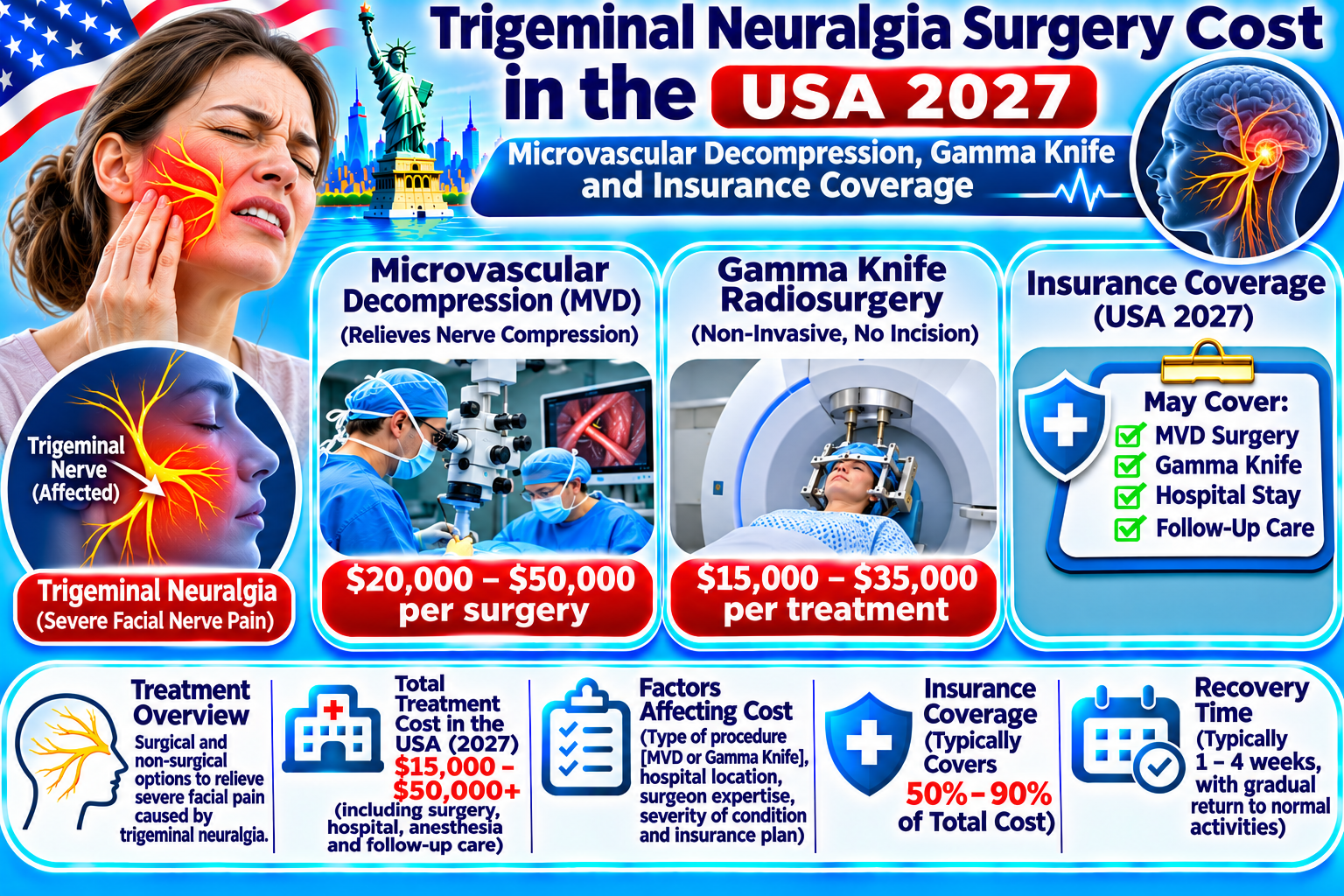
Trigeminal neuralgia is a neurological condition that causes sudden, severe facial pain. The pain often feels like an electric shock and may be triggered by everyday activities such as eating, speaking, brushing teeth, or touching the face. When medication cannot adequately control symptoms, specialized procedures may provide meaningful relief.
Understanding trigeminal neuralgia surgery costs in the USA in 2027 is important for patients comparing microvascular decompression, Gamma Knife radiosurgery, neurosurgeon fees, hospital expenses, and health insurance coverage. Treatment prices vary according to the selected procedure, medical facility, insurance benefits, and individual health requirements.
Microvascular decompression is an operation designed to relieve pressure from a blood vessel pressing against the trigeminal nerve. Gamma Knife radiosurgery, by comparison, uses focused radiation without an open surgical incision.
This guide examines estimated American treatment costs for 2027, including diagnostic imaging, surgical procedures, medication expenses, Medicare benefits, recovery, and long-term follow-up.
What Is Trigeminal Neuralgia?
Trigeminal neuralgia affects the trigeminal nerve, which carries sensation from the face to the brain. The condition typically produces episodes of intense pain on one side of the face.
In classical trigeminal neuralgia, a nearby blood vessel may compress the nerve. Other cases can be associated with multiple sclerosis, tumors, or different neurological conditions.
Common symptoms include:
- Sudden electric shock-like facial pain.
- Brief episodes lasting seconds to minutes.
- Pain triggered by chewing or speaking.
- Discomfort while washing or touching the face.
- Repeated attacks affecting daily activities.
- Periods of improvement followed by recurrence.
Persistent facial pain requires proper medical evaluation because dental disorders, headaches, and other neurological conditions can produce overlapping symptoms.
When Is Trigeminal Neuralgia Surgery Necessary?
Medication is generally the initial treatment for trigeminal neuralgia. Commonly prescribed medicines include carbamazepine and oxcarbazepine, with alternatives considered according to individual circumstances.
Surgery or another procedure may be discussed when medication provides insufficient relief, produces unacceptable side effects, or becomes difficult to tolerate.
The decision depends on imaging findings, symptom characteristics, age, medical fitness, and patient preferences.
Patients should consult a neurologist and an experienced neurosurgeon before selecting an invasive treatment.
How Is Trigeminal Neuralgia Diagnosed?
Diagnosis begins with a detailed medical history and neurological examination. Doctors assess pain location, duration, triggers, and associated symptoms.
Brain MRI is commonly used to evaluate possible blood vessel compression and investigate other causes, including tumors or multiple sclerosis.
Additional examinations may be necessary when symptoms are unusual or the diagnosis remains uncertain.
Types of Trigeminal Neuralgia Surgery
Microvascular Decompression
Microvascular decompression, or MVD, is performed under general anesthesia. The surgeon makes an opening in the skull behind the ear and carefully separates a compressing blood vessel from the trigeminal nerve.
A small protective material may be placed between the nerve and blood vessel to reduce further irritation.
MVD aims to address the underlying compression without intentionally damaging the nerve. However, it is a major operation and carries risks associated with cranial surgery.
Gamma Knife Radiosurgery
Gamma Knife radiosurgery is a form of stereotactic radiosurgery. Despite its name, it does not involve a traditional surgical incision.
The treatment delivers highly focused radiation to a selected portion of the trigeminal nerve, reducing its ability to transmit pain signals.
It is generally performed without an overnight hospital stay, although individual arrangements vary. Pain relief may develop gradually over several weeks or months.
Balloon Compression
Percutaneous balloon compression uses a catheter and inflatable balloon to compress selected trigeminal nerve fibers.
It may be considered for patients who are not suitable candidates for open surgery. Facial numbness and recurrence are important considerations.
Radiofrequency Rhizotomy
Radiofrequency rhizotomy uses controlled heat to interrupt selected pain-transmitting nerve fibers.
Although it can provide symptom relief, some patients experience facial numbness or require repeat treatment.
Glycerol Rhizotomy
Glycerol rhizotomy involves injecting a chemical agent near the trigeminal nerve to reduce pain transmission.
Procedure selection depends on specialist assessment, previous treatments, and individual risk factors.
Trigeminal Neuralgia Surgery Cost in the USA in 2027
American treatment costs depend on surgical complexity, hospital setting, anesthesia, specialist fees, diagnostic testing, and postoperative care.
Historical Medicare claims research reported weighted treatment costs of approximately $40,435 for microvascular decompression and $38,062 for stereotactic radiosurgery. Those findings reflect an older study population and should not be interpreted as current national prices.
The following 2027 figures are illustrative budgeting estimates rather than verified future charges or guaranteed insurance payments.
Estimated USA Cost Breakdown
| Treatment or Service | Estimated Cost (USD) |
|---|---|
| Neurologist Consultation | $150–$500+ |
| Neurosurgeon Consultation | $200–$600+ |
| Brain MRI | $500–$3,000+ |
| Microvascular Decompression | $30,000–$80,000+ |
| Gamma Knife Radiosurgery | $15,000–$45,000+ |
| Balloon Compression | $6,000–$18,000+ |
| Radiofrequency Rhizotomy | $5,000–$15,000+ |
| Glycerol Rhizotomy | $5,000–$15,000+ |
| Anesthesia Professional Fee | $800–$3,500+ if separate |
| Follow-Up Specialist Visit | $100–$400+ if separate |
Important: These broad hypothetical ranges are for financial planning only. Surgery prices may already include facility, anesthesia, and surgeon charges. Patients should avoid adding overlapping costs.
USA Trigeminal Neuralgia Treatment Cost Comparison
Because this article focuses on the United States, the following table compares American treatment options rather than unrelated countries.
| USA Treatment Scenario | Illustrative Total Budget |
|---|---|
| Microvascular Decompression With Hospital Care | $30,000–$80,000+ |
| Gamma Knife Radiosurgery | $15,000–$45,000+ |
| Percutaneous Nerve Procedure | $5,000–$18,000+ |
| Complex or Repeat Neurosurgical Treatment | $35,000–$100,000+ |
Actual hospital charges, insurer-negotiated payments, and patient out-of-pocket expenses can differ substantially.
Microvascular Decompression Surgery Cost
MVD expenses typically include neurosurgeon services, operating room resources, general anesthesia, inpatient monitoring, medications, and postoperative care.
Hospitalization may last several days following an uncomplicated operation. Additional care may be required for patients with other medical conditions or surgical complications.
The surgeon’s experience, hospital resources, and insurance arrangements can influence the total bill.
Gamma Knife Radiosurgery Cost
Gamma Knife treatment uses specialized radiation equipment, treatment planning software, imaging, and a multidisciplinary clinical team.
Although patients usually avoid a traditional surgical incision and prolonged hospitalization, advanced equipment and planning services can make treatment expensive.
Patients should confirm whether the quotation includes imaging, radiation planning, physician services, and follow-up appointments.
Microvascular Decompression vs Gamma Knife
MVD and Gamma Knife offer different benefits and risks. MVD addresses vascular compression when present, while Gamma Knife reduces pain transmission through targeted radiation.
MVD may provide rapid relief for appropriately selected patients, but requires cranial surgery and general anesthesia.
Gamma Knife avoids open surgery, although pain improvement can be delayed and some patients require further treatment.
Long-term pain control, facial sensation, surgical risk, and personal preferences should be discussed with a specialist before making a decision.
Trigeminal Neuralgia Surgery With Health Insurance
Many comprehensive health insurance plans cover medically necessary trigeminal neuralgia procedures when clinical documentation satisfies policy requirements.
Coverage may include MVD, Gamma Knife, and selected percutaneous procedures, depending on the insurance plan.
Important insurance considerations include:
- Annual deductible and out-of-pocket maximum.
- Neurosurgeon and hospital network participation.
- Prior authorization requirements.
- Documentation of previous medication treatment.
- Coverage for MRI and other diagnostic examinations.
- Inpatient versus outpatient benefits.
- Anesthesia and radiation planning charges.
- Coverage for repeat procedures when necessary.
Insurance approval does not guarantee zero out-of-pocket costs. Patients should request a personalized benefits estimate before planned treatment.
Medicare Coverage for Trigeminal Neuralgia
Original Medicare may cover medically necessary trigeminal neuralgia procedures when applicable requirements are satisfied.
Medicare Part A generally applies to qualifying inpatient hospital admissions. Part B commonly covers eligible physician services, outpatient procedures, and diagnostic testing.
For many covered Part B services, patients pay 20% of the Medicare-approved amount after meeting the applicable deductible.
Medicare Advantage plans may have different authorization rules, provider networks, and cost-sharing requirements.
Medicaid and Financial Assistance
Medicaid may cover medically necessary trigeminal neuralgia treatment for eligible individuals, subject to state-specific benefits and authorization requirements.
Some nonprofit hospitals offer financial assistance to qualifying patients. Financial counselors can explain eligibility and available payment arrangements.
Treatment Without Insurance
Uninsured patients may face substantial expenses for neurosurgical procedures, imaging, hospital care, and follow-up treatment.
Before accepting a self-pay quotation, patients should ask:
- Are neurosurgeon fees included?
- Does the estimate cover anesthesia?
- How many hospital days are included?
- Are MRI and treatment planning charges separate?
- Are postoperative consultations included?
- What happens if additional treatment becomes necessary?
Factors Influencing Surgery Prices
1. Treatment Technique
Open cranial surgery, focused radiosurgery, and percutaneous procedures require different equipment, staffing, and hospital resources.
2. Hospital and Facility Charges
Operating room services, inpatient accommodation, nursing care, and specialized equipment affect the total price.
3. Neurosurgeon Experience
Professional fees vary according to provider contracts, geographic location, and the complexity of the procedure.
4. Insurance Coverage
Deductibles, coinsurance, network restrictions, and negotiated reimbursement rates influence patient expenses.
5. Diagnostic Imaging
Brain MRI and other necessary examinations may create additional charges before treatment.
6. Medication Expenses
Patients may need continued pain medication before or after treatment. Prescription costs depend on the drug and insurance benefits.
7. Complications or Repeat Treatment
Additional procedures, unexpected hospitalization, or recurrent facial pain can increase long-term healthcare spending.
Recovery After Microvascular Decompression
Recovery after MVD varies according to age, medical condition, and surgical complexity.
Patients typically undergo hospital monitoring after surgery. Temporary fatigue, headache, or discomfort near the incision may occur.
Return to routine activities is gradual and should follow the neurosurgeon’s instructions.
Recovery After Gamma Knife
Gamma Knife treatment is generally performed without a traditional surgical incision. Many patients return home on the treatment day.
Pain relief may take several weeks or months. Patients often continue prescribed medication during this period.
Medication should only be reduced according to the treating clinician’s instructions.
Possible Complications and Additional Costs
MVD carries potential risks including bleeding, infection, hearing changes, cerebrospinal fluid leakage, and neurological injury.
Gamma Knife and percutaneous procedures can cause facial numbness, altered sensation, or persistent pain.
Unexpected complications may require additional imaging, medication, hospitalization, or repeat treatment.
How to Reduce Treatment Costs
- Verify insurance coverage before planned procedures.
- Request a complete written hospital estimate.
- Confirm specialist and facility network participation.
- Ask whether anesthesia and imaging are included.
- Review prescription medication benefits.
- Explore hospital financial assistance programs.
- Discuss all medically appropriate treatment options.
The least expensive procedure is not necessarily the most suitable. Long-term pain control, safety, and specialist expertise should guide treatment decisions.
Frequently Asked Questions
How much does trigeminal neuralgia surgery cost in the USA in 2027?
Illustrative prices may range from $30,000 to $80,000 or more for microvascular decompression and $15,000 to $45,000 or more for Gamma Knife radiosurgery.
Does insurance cover microvascular decompression?
Many plans cover medically necessary MVD when applicable clinical criteria and authorization requirements are satisfied.
Is Gamma Knife cheaper than MVD?
Not always. The comparison depends on hospital charges, insurance contracts, treatment planning, and follow-up requirements.
Does Medicare cover trigeminal neuralgia surgery?
Medicare may cover qualifying medically necessary procedures under applicable inpatient or outpatient benefits.
Is Gamma Knife actual surgery?
No. Gamma Knife is a focused radiation treatment that does not require a conventional surgical incision.
Can facial pain return after treatment?
Yes. Pain may recur after any trigeminal neuralgia procedure, and some patients require additional treatment.
How long does Gamma Knife take to work?
Some patients improve within weeks, while others require several months to experience substantial pain relief.
Conclusion
Trigeminal neuralgia surgery costs in the USA in 2027 depend on microvascular decompression, Gamma Knife radiosurgery, neurosurgeon fees, hospital expenses, medication requirements, and insurance coverage.
MVD may be appropriate for selected patients with vascular nerve compression, while Gamma Knife and percutaneous procedures offer alternatives for individuals seeking or requiring less invasive treatment.
Patients should obtain detailed financial estimates, verify insurance benefits, and consult experienced neurological specialists before making treatment decisions.
Medical Disclaimer: This article provides general educational and financial planning information only. It does not replace professional medical advice, diagnosis, or treatment. All 2027 prices are illustrative estimates and should be verified directly with healthcare providers, hospitals, and insurance companies.
